
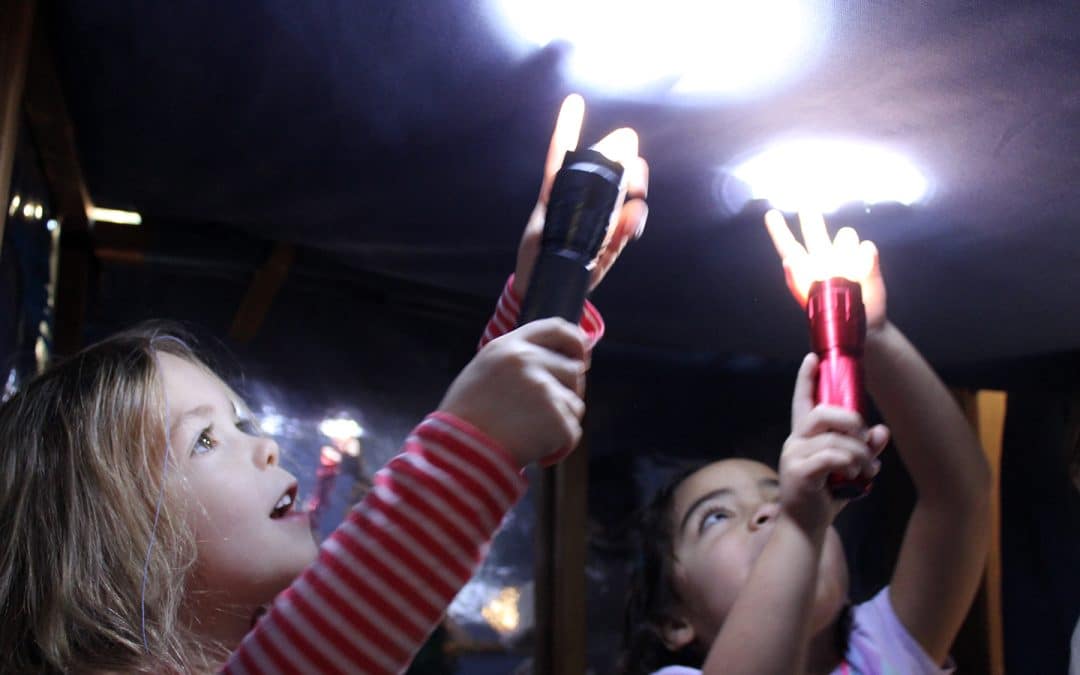
“Walk upstairs, open the door gently, and look in the crib. What do you see? Most of us see a picture of innocence and helplessness, a clean slate. But, in fact, what we see in the crib is the greatest mind that has ever existed, the most powerful learning machine in the universe.” -Gopnik, Meltzoff, and Kuhl in The Scientist in the Crib (1999)
A child comes to the world as a philosopher, scientist, poet, and artist. It’s all there and awaiting expression when she is born. Free to her own research, she is the constant explorer, the quintessential question maker, the “scientist in the crib.” She is born to follow her curiosity, and it brings her pleasure and satisfaction. She asks questions long before she is able to answer them. She is hardwired to learn. And learn she does, from every interaction, every experience, and every challenge that the world poses for her or that she poses for herself.
Then school happens. Because she is also hardwired for relationships…seeking, forming, maintaining…a new variable enters the equation: the pleasure of the teacher. She needs the adult in the room, and a relationship with her, to feel safe. In that way, the adult has a power that she might be tempted to exploit, albeit unconsciously. Pleasing that adult becomes important to the child. The adult’s approval can either encourage or discourage all that the child was born to do. It can empower exploration, question-asking, inquiry, curiosity, and creativity. Or it can privilege compliance to an adult agenda that squashes it all. The child who is risk-averse or who has learned to play the please-the-teacher game may relinquish her questions in order to preserve her relationship with the teacher. I think that many teachers are not aware that they are participating in this shifting of children’s focus from asking questions to answering them; from exploring with all the senses to sitting quietly in circle time; from engaging in inquiry to waiting for the next step in the directions. Nor are they aware of the consequences of insisting children learn how to “do school.” Curiosity and critical/logical thinking are like muscles that can atrophy over time if not used and developed.
I know adults who claim that they are not creative. We can argue about whether that can actually be true. Regardless, someone who claims not to be creative will not be inclined to act creatively. Adults who aren’t curious enough to ask the questions that might lead them closer to truth weren’t born curiosity-less. College students who are uncomfortable unless the professor spells out exactly what will be on the exam and are focused on the grade they will get as an indicator of the teacher’s pleasure were not born to answer questions, rather than ask them. These dispositions were created. As Ken Robinson said in his 2006 TED talk, “We are educating people out of their creative capacities.” The primary school child who determinedly holds on to her right to ask the questions as well as answer them risks the displeasure of the person who is supposed to keep her safe at school. The child and her intellectual future pay the price of a curriculum based on control of the individual.
How might we do school without burying the “scientist in the crib?”
- We can ask children, “What do you think?”
- We can encourage their theory-making by being intentional about our response to their questions. Sometimes a child’s question requires a scientific answer. But often, a young child who asks a question already has a theory. She may simply want to engage in conversation with you about the idea.
- We can recognize the questions children pose in their play, conversation, and representation (for questions are not always spoken aloud).
- We can help them expand upon and revise their questions.
- We can support children’s research into what sparks their curiosity.
- We can facilitate children’s conversations for the co-construction of theory.
- We can bring groups of children together so that they encounter perspectives that differ from their own.
- We can teach children how to use the curiosity that is their birthright.
Their future will thank us.